
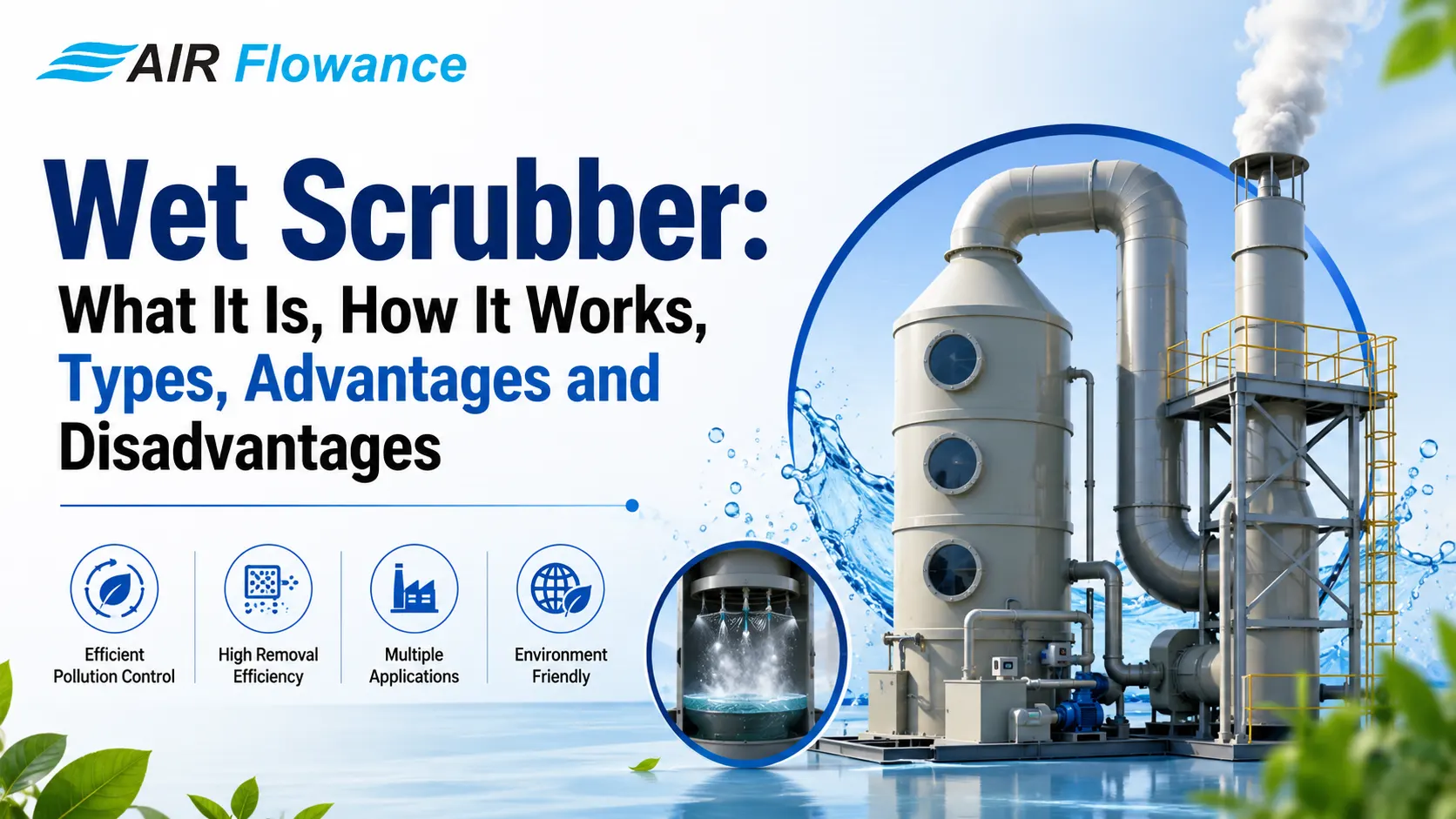
Air pollution control has become a top priority for industries aiming to protect the environment and comply with emission regulations. One of the most effective technologies used to remove harmful gases, dust, fumes, and particulate matter from industrial exhaust is the wet scrubber for air pollution control. These systems are widely installed in chemical plants, pharmaceutical units, metal processing industries, power plants, food processing facilities, and manufacturing units where clean air is essential.
Air Flowance System is a trusted manufacturer that continues to offer high-quality wet scrubber solutions designed to improve air quality, enhance workplace safety, and meet environmental standards. Built with advanced engineering and durable materials, these systems provide reliable performance even in demanding industrial environments.
What Is a Wet Scrubber?
It is an air pollution control device that removes contaminants from industrial exhaust gases by bringing them into contact with a scrubbing liquid, usually water or a specially formulated chemical solution. As polluted air passes through the scrubber, the liquid captures dust particles, smoke, toxic gases, and chemical vapors before the cleaned air is released into the atmosphere.
A wet scrubber for air pollution control is particularly effective in industries where both particulate matter and gaseous pollutants need to be removed simultaneously. Because of its high efficiency and versatility, it has become one of the most widely used pollution control systems worldwide.
How Does a Wet Scrubber Work?
Understanding how a wet scrubber works helps industries choose the right pollution control equipment. The process generally includes the following steps:
- Contaminated air enters the scrubber chamber.
- Water or another scrubbing liquid is sprayed through specially designed nozzles.
- The polluted air mixes thoroughly with the liquid droplets.
- Dust particles and harmful gases become trapped in the liquid.
- The contaminated liquid is collected for treatment or disposal.
- Cleaned air is discharged safely through the exhaust stack.
This efficient process makes the wet scrubber for air pollution control highly effective in reducing emissions while maintaining continuous industrial operations.
Types of Wet Scrubbers
Different industrial processes require different scrubber designs. Common types include:
Spray Tower Wet Scrubber
A spray tower uses high-pressure nozzles to spray liquid into the exhaust stream. It is commonly used for gas absorption and dust removal.
Venturi Wet Scrubber
Venturi scrubbers generate extremely fine droplets by accelerating the airflow through a narrow throat. They provide excellent removal of fine particulate matter.
Packed Bed Wet Scrubber
Packed bed scrubbers contain specially designed packing materials that increase the contact area between gas and liquid, making them highly effective for removing chemical gases.
Cyclonic Wet Scrubber
This design combines centrifugal force with liquid spraying to separate dust and pollutants efficiently.
Each type of wet scrubber for air pollution control is selected based on industrial requirements and pollutant characteristics.
Advantages of Wet Scrubbers
A high-quality wet scrubber offers several important benefits:
- Excellent removal of dust and particulate matter
- Effective gas absorption
- Simultaneous removal of multiple pollutants
- Reduced fire and explosion risks
- Improved workplace air quality
- Suitable for high-temperature exhaust gases
- Low maintenance requirements
- Reliable continuous operation
- Compliance with environmental regulations
- Long service life
Air Flowance System continues to offer advanced wet scrubber solutions that deliver outstanding pollution control while reducing operating costs.
Disadvantages of Wet Scrubbers
Although highly effective, wet scrubbers also have certain limitations:
- Require continuous water supply
- Wastewater treatment may be necessary
- Higher installation cost than some dry systems
- Corrosion-resistant materials may increase equipment cost
- Regular maintenance of pumps and nozzles is required
- Moisture can affect downstream equipment if not properly managed
Despite these limitations, a properly designed wet scrubber for air pollution control remains one of the most dependable air pollution control systems available.
What Are Scrubbers Used For?
Wet scrubbers are used in numerous industries to reduce harmful emissions before they enter the atmosphere.
Major applications include:
- Chemical manufacturing
- Pharmaceutical production
- Fertilizer plants
- Food processing industries
- Textile factories
- Metal processing units
- Cement plants
- Steel manufacturing
- Paint industries
- Waste treatment facilities
- Paper mills
- Power generation plants
These industries rely on wet scrubbers for air pollution control systems to maintain environmental compliance and improve workplace safety.
Why Choose an Air Flowance System?
Choosing the right manufacturer is essential for achieving long-term pollution control performance. Air Flowance System delivering efficient, durable, and customized wet scrubber solutions for various industries. Every wet scrubber is designed to provide maximum efficiency while meeting industry standards and environmental regulations.
A wet scrubber for air pollution control is one of the most reliable and efficient solutions for reducing industrial emissions, improving air quality, and protecting the environment. Whether removing dust, fumes, chemical vapors, or harmful gases, wet scrubbers provide exceptional performance across a wide range of industrial applications. With its commitment to quality, innovation, and customer satisfaction, Air Flowance System continues to offer advanced wet scrubber solutions that help businesses operate responsibly while maintaining cleaner and safer environments.