
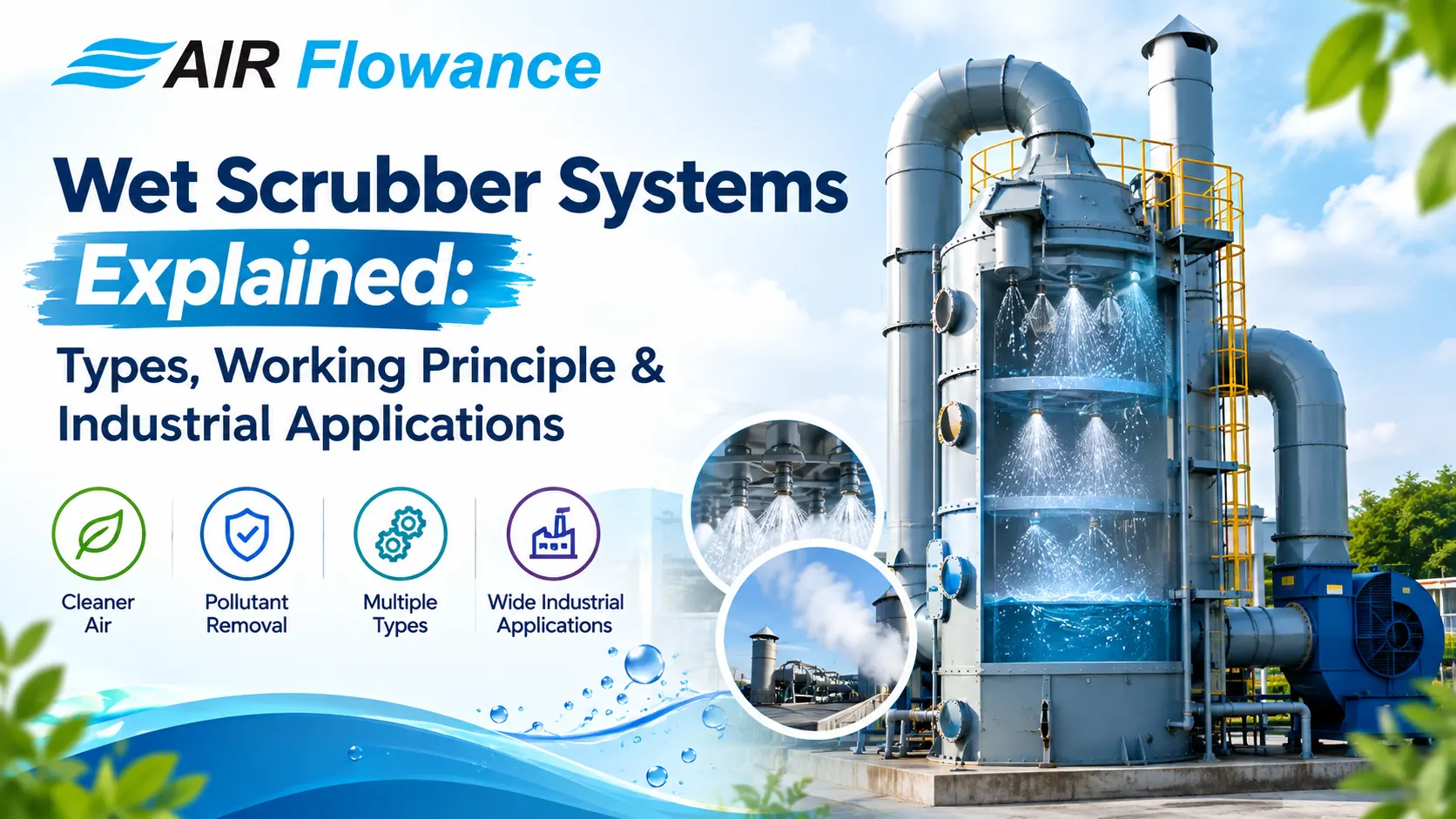
Wet scrubber systems are widely used in industries to control air pollution and remove unwanted particles, gases, fumes, and chemical contaminants from industrial exhaust streams. Unlike dry filtration systems, wet scrubbers use a liquid, usually water or a specially selected chemical solution, to capture pollutants before the treated air is released. They are commonly used where industrial processes generate dust, acidic gases, chemical fumes, or other airborne contaminants.
Air Flowance System provides practical air pollution control solutions for industries that need efficient and reliable emission management. A properly selected wet scrubber can help improve workplace air quality, support environmental compliance, and create a cleaner production environment.
What Is a Wet Scrubber System?
A wet scrubber is an air pollution control device that brings contaminated gas into contact with a liquid. The contact between the gas and liquid allows pollutants to be captured, dissolved, neutralized, or separated from the exhaust stream.
Depending on the application, the liquid may simply be water or may contain chemicals designed to react with specific pollutants. The selection depends on the type of contaminant, gas temperature, concentration, required removal efficiency, and industrial process.
Wet scrubbers can be designed for different capacities and operating conditions. Their flexibility makes them suitable for applications ranging from dust collection to chemical gas treatment.
Working Principle of Wet Scrubbers
The basic working principle is based on close contact between polluted air and a liquid. Contaminated gas enters the scrubber and comes into contact with fine liquid droplets or a liquid film. Pollutant particles and soluble gases are captured by the liquid.
In some systems, a high-speed gas stream breaks the liquid into small droplets, increasing the contact area. In other designs, packing materials provide a larger surface area where the gas and liquid can interact.
After the scrubbing stage, the cleaned gas passes through a mist eliminator to remove entrained liquid droplets. The treated air is then discharged through the outlet, while the collected pollutants and liquid move toward the appropriate collection or treatment section.
Types of Wet Scrubber Systems
Spray Tower Scrubber
A spray tower uses nozzles to distribute liquid into the contaminated gas stream. The droplets come into contact with pollutants and capture them during the scrubbing process. This type of system has a relatively simple construction and can be used for gas absorption and particle removal.
Packed Bed Scrubber
A packed bed scrubber contains specially selected packing material inside the vessel. The liquid flows over the packing while contaminated gas passes through it. These scrubbers are particularly useful for removing soluble gases and chemical fumes.
Venturi Scrubber
A Venturi scrubber uses a specially shaped throat to accelerate the gas stream. Liquid is introduced into the high-velocity gas flow, producing very fine droplets and strong turbulence. This makes Venturi scrubbers suitable for applications requiring effective removal of fine particulate matter.
Cyclonic Wet Scrubber
Cyclonic wet scrubbers combine liquid scrubbing with centrifugal movement. The contaminated gas follows a rotating path, helping separate particles while the liquid captures pollutants. They can be useful for industrial exhaust streams containing particulate matter.
Working Principle of Wet Scrubbers
The basic working principle is based on close contact between polluted air and a liquid. Contaminated gas enters the scrubber and comes into contact with fine liquid droplets or a liquid film. Pollutant particles and soluble gases are captured by the liquid.
In some systems, a high-speed gas stream breaks the liquid into small droplets, increasing the contact area. In other designs, packing materials provide a larger surface area where the gas and liquid can interact.
After the scrubbing stage, the cleaned gas passes through a mist eliminator to remove entrained liquid droplets. The treated air is then discharged through the outlet, while the collected pollutants and liquid move toward the appropriate collection or treatment section.
Industrial Applications of Wet Scrubbers
Wet scrubbers are used across many industries where exhaust gases or airborne particles need to be controlled.
Chemical Industries
Chemical manufacturing processes can release acidic gases, vapours, and chemical fumes. Wet scrubbers can help capture or neutralize these contaminants before exhaust air is discharged.
Metal and Foundry Industries
Foundries and metal-processing facilities may generate dust, fumes, and particulate matter. Suitable wet scrubber systems can help control these emissions and improve the working environment.
Pharmaceutical Industries
Pharmaceutical production may involve powders, chemical vapours, and process emissions. Wet scrubbing systems can be selected according to the specific characteristics of the exhaust stream.
Food Processing Industries
Certain food-processing operations can produce odours, dust, and airborne particles. Wet scrubbers can be incorporated into ventilation and exhaust systems to manage these emissions.
Fertilizer and Chemical Processing
Fertilizer manufacturing and related chemical processes may generate gases that require absorption or neutralization. A properly configured scrubber can provide an effective pollution-control stage.
Cement and Industrial Manufacturing
Industrial manufacturing operations can generate particulate-laden exhaust. Depending on the process, wet scrubbers can assist in controlling dust and other pollutants.
Benefits of Wet Scrubber Systems
One of the main benefits of wet scrubbers is their ability to handle both particulate matter and certain gaseous pollutants within a single pollution-control system. They can also be useful for hot or moisture-containing gas streams where conventional dry filters may not always be suitable.
Wet scrubbers can reduce airborne contaminants, support cleaner industrial environments, and help industries meet applicable emission-control requirements. With proper maintenance, they can provide dependable performance over extended operating periods. The system can be customized with different pumps, nozzles, packing materials, mist eliminators, tanks, and control arrangements according to the application.
Why Choose Air Flowance System?
Choosing the right pollution-control equipment requires an understanding of the industrial process and the pollutants being generated. Air Flowance System focuses on providing air pollution control solutions according to specific industrial requirements. Our company can offer suitable wet scrubber solutions based on factors such as exhaust volume, pollutant type, operating conditions, and required performance. A customized approach helps industries select a system that is practical for their process rather than relying on a one-size-fits-all arrangement.
Wet scrubber systems provide an effective method for controlling industrial air pollution by bringing contaminated gases into contact with a suitable liquid. Different types, including spray towers, packed bed scrubbers, Venturi scrubbers, and cyclonic wet scrubbers, can be selected according to the nature of the application.
From chemical and metal processing to pharmaceutical, food, fertilizer, and general manufacturing industries, these systems can play an important role in managing industrial emissions. With appropriate scrubber design, installation, and maintenance, businesses can achieve dependable pollution control and maintain a cleaner working environment.