

Air pollution control has become an important part of modern industrial operations. Manufacturing plants generate dust, smoke, fumes, gases, and other airborne pollutants during different production processes. If these emissions are not managed properly, they can affect workplace air quality, equipment performance, and the surrounding environment.
Air Flowance System provides industrial air pollution control solutions designed to meet the requirements of different manufacturing facilities. Our company understands that every plant has unique emission sources, production capacities, and installation requirements. Selecting the right equipment and planning an effective system are essential for achieving reliable results. From dust collection to industrial air filtration, a properly designed solution can help businesses improve their pollution management practices.
What Is an Air Pollution Control System?
An Air Pollution Control system is a combination of equipment and processes used to capture, separate, filter, or treat pollutants generated during industrial activities. These systems are commonly installed in manufacturing plants, processing facilities, workshops, and other industrial environments where airborne contaminants are produced.
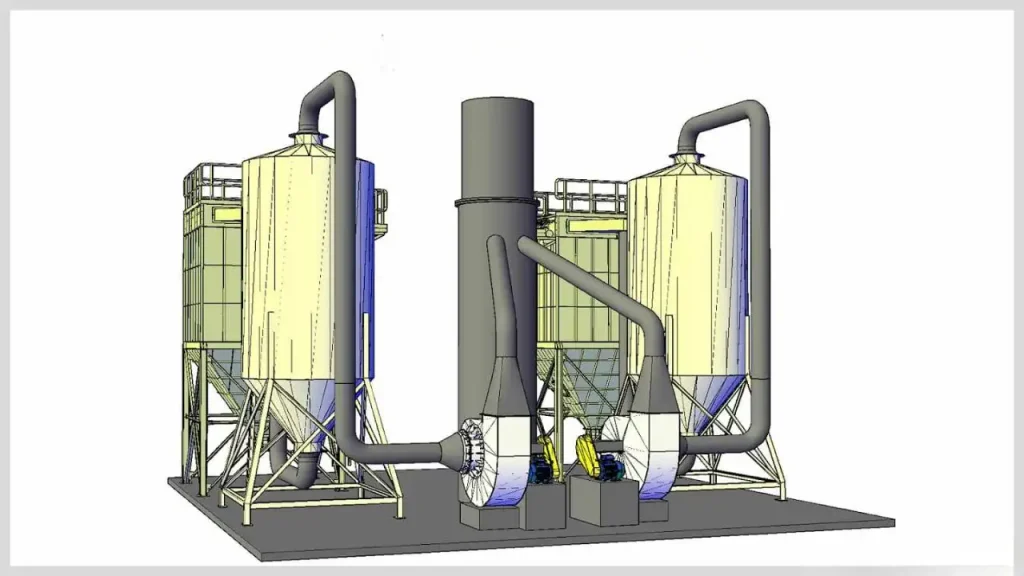
The main purpose of an industrial air pollution control system is to prevent or reduce the release of harmful pollutants into the atmosphere. Depending on the application, the system may use filters, scrubbers, cyclones, extraction fans, ducting networks, or other pollution control technologies.
Air Pollution Control Equipment Design
Effective air pollution control equipment design begins with understanding the industrial process and identifying the sources of pollution. A well-planned design considers several important factors, including the type of pollutant, particle size, airflow volume, temperature, moisture content, and required emission control performance.
1. Identifying Pollution Sources
These sources may include grinding machines, cutting operations, material transfer points, mixing units, boilers, and industrial processing equipment.
2. Calculating Airflow Requirements
Airflow capacity is an essential part of system design. The equipment must move sufficient air to capture contaminants effectively at the required points. An unsuitable airflow arrangement can allow pollutants to escape into the workplace or create unnecessary energy consumption.
3. Selecting Suitable Equipment
Different pollutants require different control technologies. A dust collector may be suitable for dry particulate matter, while a wet scrubber may be appropriate for certain dusts or gases, depending on their chemical properties and process conditions.
4. Planning Ducting and Filtration
Ductwork connects pollution sources to the collection or treatment equipment. Proper duct sizing, routing, and airflow balancing help the system operate efficiently. Filtration media must also be compatible with the dust type, temperature, moisture, and other operating conditions.
5. Considering Maintenance and Safety
A reliable system should allow convenient inspection, cleaning, and filter replacement. The design must also account for potential hazards, including combustible dust, corrosive gases, and high-temperature emissions.
Types of Air Pollution Control Equipment
Choosing the right air pollution control equipment is essential for managing industrial emissions effectively. Different technologies serve different purposes, and some applications may require more than one type of equipment.
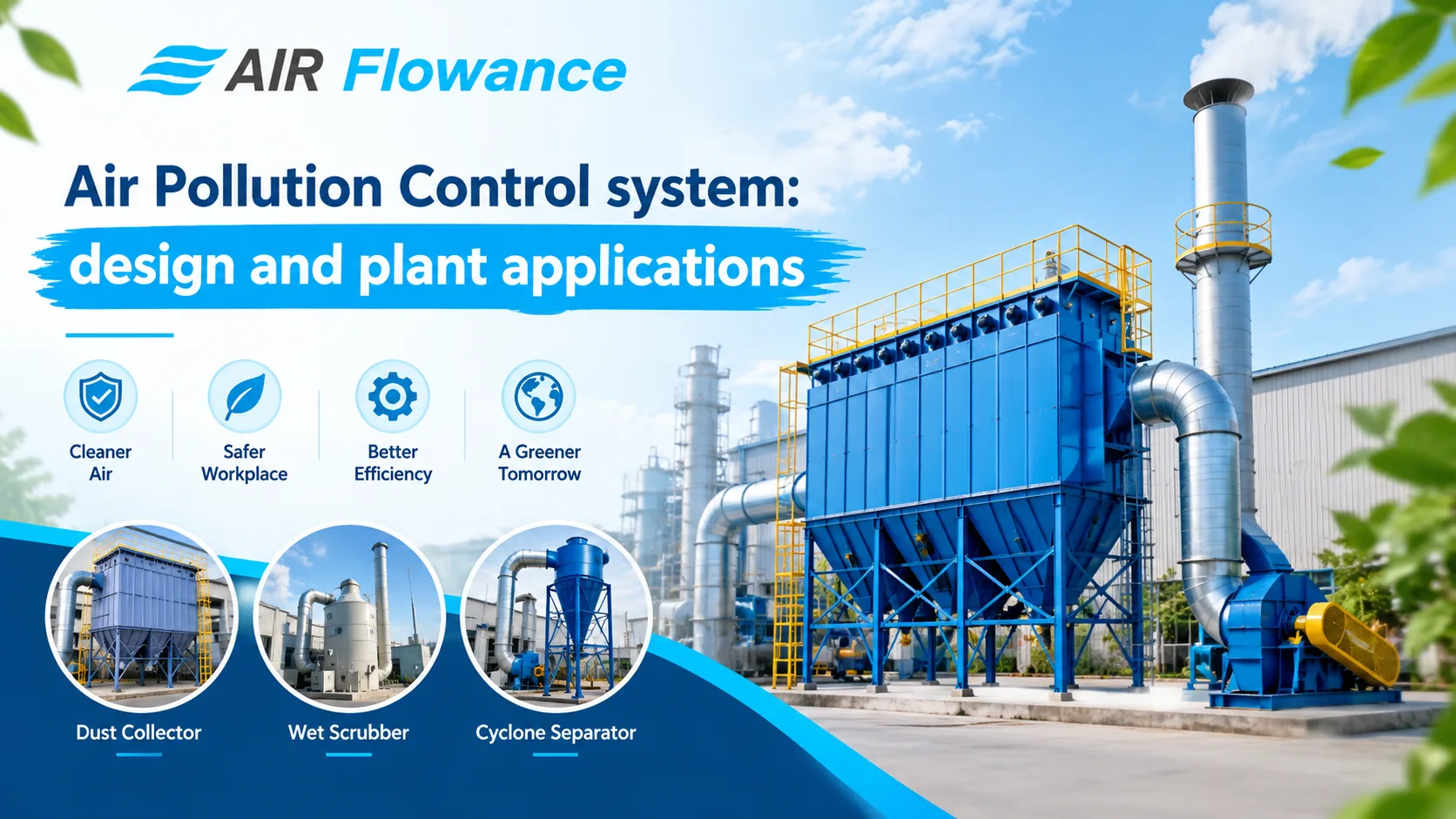
Dust Collector
A dust collector captures airborne solid particles generated during industrial operations. It commonly uses a fan, ducting, filters, and a dust collection arrangement. Bag filter and cartridge collector systems are used in various applications, depending on dust characteristics and filtration requirements.
Wet Scrubber
A wet scrubber uses a liquid, commonly water or a specially selected treatment solution, to remove certain pollutants from an airstream. Depending on its design, it may control particulate matter or absorb specific gaseous contaminants.
Cyclone Dust Collector
A cyclone separator uses centrifugal action to separate larger or heavier particles from an air stream. It may be installed as a pre-cleaning stage before a more efficient filtration unit.
Industrial Exhaust and Ventilation Systems
Industrial exhaust systems remove contaminated air from specific production areas. When designed correctly, they help capture pollutants at their source and direct them towards suitable collection or treatment equipment. Effective ventilation planning also supports better airflow management inside the plant.
Plant Applications of Air Pollution Control Systems
Air pollution control systems are used across a wide range of industrial sectors. In glass manufacturing, they can help manage dust produced during selected grinding, polishing, and material-handling activities. Metal fabrication plants may use extraction systems to control dust and fumes generated during cutting or grinding, with equipment selected according to the process.
Cement, construction material, and powder-processing facilities may require dust collection at transfer points, mixing units, and packaging lines. Chemical and pharmaceutical plants may need specialized filtration or gas treatment solutions based on the materials handled and their associated risks.
Food processing facilities can also benefit from suitable dust collection systems when handling flour, grains, powders, and similar materials. In these environments, hygiene, contamination prevention, and combustible dust safety must be considered carefully. Air Flowance System works in the industrial air pollution control field, helping businesses explore equipment options suited to their plant requirements.
Why Choose an Air Flowance System?
Air Flowance System understands the importance of matching pollution control technology to actual industrial requirements. Our company aims to offer solutions that consider production processes, pollutant characteristics, installation conditions, and maintenance needs. When evaluating a system, businesses should review its airflow capacity, filtration performance, energy requirements, operating costs, and servicing needs. Proper installation and periodic performance checks are equally important for long-term reliability.
An effective air pollution control system combines suitable technology, careful planning, and regular maintenance. From dust collectors and cyclone separators to wet scrubbers and industrial exhaust systems, each type of equipment serves a particular purpose. With appropriate air pollution control equipment design, industries can manage emissions more effectively and maintain cleaner production environments. Air Flowance System can help businesses explore suitable industrial pollution control solutions based on their operational needs and application requirements.