

Dust management is an important part of maintaining a clean, safe, and productive industrial environment. Manufacturing processes such as grinding, cutting, drilling, sanding, mixing, and material handling can release dust particles into the air. If this dust is not controlled properly, it can affect air quality, damage equipment, increase cleaning requirements, and create potential health and safety risks for workers.
Air Flowance System understands the importance of effective industrial ventilation and dust controller. Our company focuses on solutions that help industries manage airborne particles and maintain cleaner working environments. A properly designed dust collector system captures dust near its source, separates particles from the air, and helps prevent them from spreading throughout the facility.
What Is a Dust Collector?
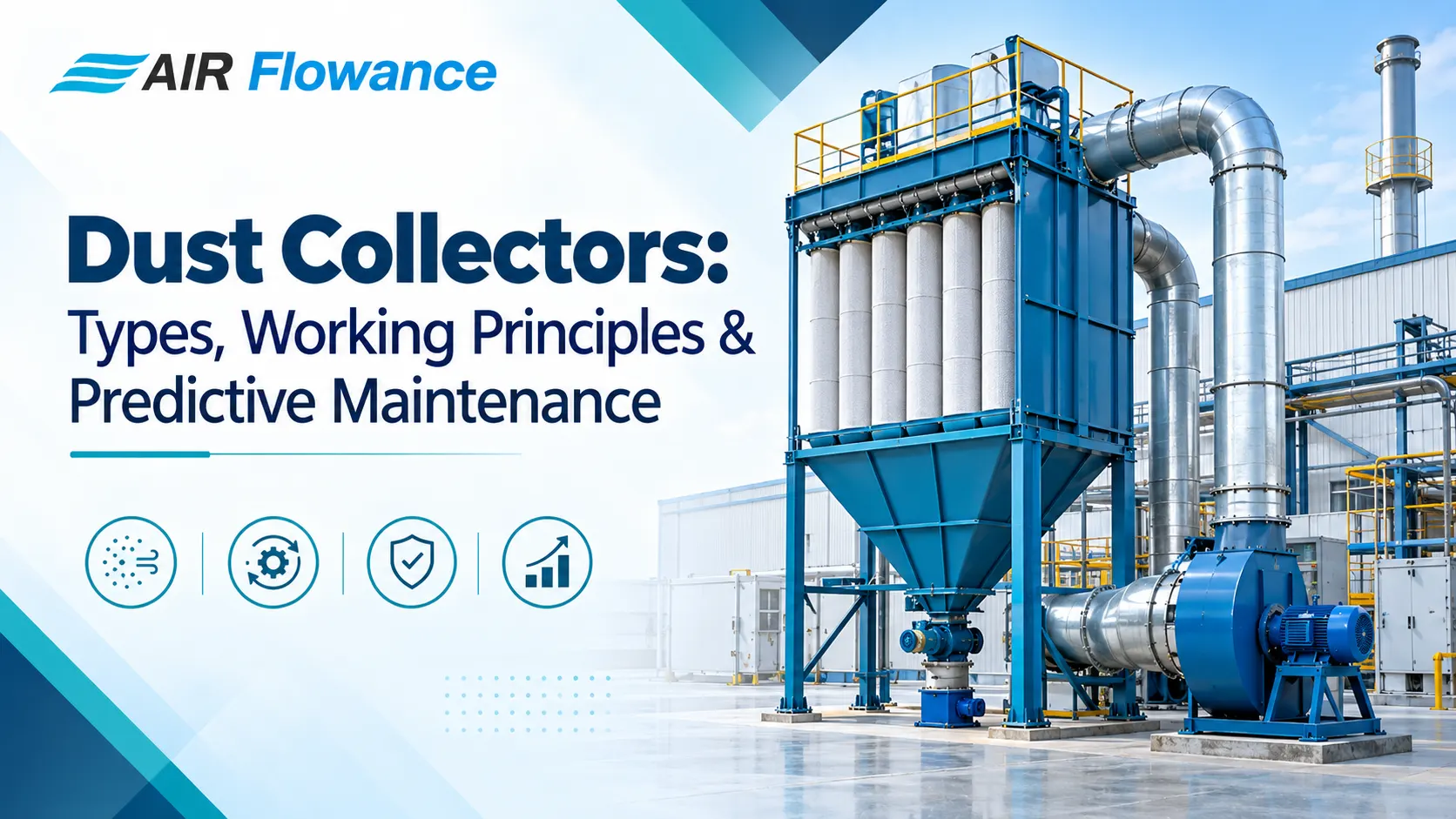
A dust collector is an industrial air filtration system designed to capture and remove dust, powder, and other airborne particles generated during manufacturing operations. It generally consists of a collection hood, ductwork, a filtration unit, a fan, and a dust discharge arrangement.
The system draws contaminated air toward the collector, where filters or other separation mechanisms remove unwanted particles. The cleaned air is then exhausted or, where appropriate and permitted, returned to the workplace.
Different Types of Dust Collectors
1. Baghouse Dust Collectors
Baghouse dust collectors use fabric filter bags to capture dust particles from contaminated air. As the air passes through the filter material, dust accumulates on the surface while cleaner air moves through the fabric. These systems are commonly used in cement plants, metalworking facilities, food processing, and various manufacturing industries.
2. Cartridge Dust Collectors
Cartridge dust collectors use pleated filter cartridges that provide a large filtration surface within a relatively compact space.Their compact design makes them useful where floor space is limited. Regular filter inspection and cleaning are important for maintaining airflow and reducing unnecessary pressure loss.
3. Cyclone Dust Collectors
Cyclone collectors use centrifugal force to separate larger or heavier particles from an air stream. Contaminated air enters the collector and moves in a circular pattern, causing particles to move toward the outer wall and fall into a collection hopper. Cyclones are frequently used as pre-cleaners before baghouse or cartridge filtration systems. They are particularly useful for removing coarse dust, chips, and heavier particles, although their effectiveness depends on particle size and operating conditions.
4. Wet Scrubbers
Wet scrubbers use a liquid, usually water or a specially selected scrubbing solution, to capture particles from an air stream. These systems can be suitable for certain applications involving combustible or sticky dust, high temperatures, or specific process contaminants. However, the correct design depends on the material being handled, and wastewater treatment or liquid disposal may also be necessary.
5. Electrostatic Precipitators
Electrostatic precipitators use electrical charges to remove particles from an air stream. The particles become electrically charged and are attracted to collection surfaces with an opposite charge. They are commonly used in certain large industrial processes where substantial quantities of fine particulate matter must be controlled.
How Does an Industrial Dust Collection System Work?
A dust collection industrial system typically follows a series of steps to control airborne particles effectively.A fan creates the airflow needed to transport contaminated air through the ductwork. The air then enters the dust collector, where filters or separation equipment remove the particles.
The collected dust falls into a hopper, bin, or another suitable discharge arrangement. Depending on the system design, cleaned air is released outside or returned to the facility after appropriate filtration and safety assessment.
Predictive Maintenance for Dust Collectors
Predictive maintenance helps identify potential equipment problems before they cause unexpected breakdowns. Instead of depending only on fixed maintenance schedules, operators monitor equipment condition and use performance data to determine when maintenance may be needed.
1. Monitor Differential Pressure
Differential pressure across the filters indicates the resistance to airflow. A gradual increase may suggest filter loading, while an unusually low reading can indicate a damaged filter, leakage, or another system issue. Readings should be compared with the manufacturer’s recommended operating range.
2. Inspect Fan and Motor Performance
Monitor vibration, unusual noise, motor temperature, and electrical current. Changes from normal operating conditions can indicate imbalance, bearing wear, misalignment, or motor-related problems.
3. Check Airflow Performance
Reduced airflow may result from blocked ducts, overloaded filters, leaking connections, or incorrect damper positions. Regular airflow measurements help identify performance changes before they significantly affect production.
4. Use Sensors and Monitoring Systems
Differential pressure sensors, vibration sensors, temperature monitoring, and motor-current data can help operators identify developing problems. Where suitable, automated monitoring systems can generate alerts when readings move outside established limits.
5. Maintain Inspection Records
Recording filter changes, pressure readings, maintenance activities, and equipment faults helps identify recurring issues. This information supports better maintenance planning and more informed replacement decisions.
Predictive maintenance should complement routine inspections, filter servicing, and safety checks rather than replace them.
Why Choose an Air Flowance System?
Air Flowance System recognizes that different industries face different dust control challenges. A metal fabrication unit may require a different filtration arrangement from a woodworking facility, cement plant, or powder processing operation. Our company aims to offer practical industrial air pollution control solutions based on application requirements. Selecting the right system involves considering dust characteristics, required airflow, available installation space, operating conditions, maintenance access, and applicable environmental and workplace safety standards.
A well-designed system can help businesses manage dust more effectively, protect equipment, improve housekeeping, and support a healthier working environment.
Dust collectors are essential for controlling airborne particles across a wide range of manufacturing operations. Understanding the differences between baghouse, cartridge, cyclone, wet scrubber, and electrostatic systems helps industries identify suitable technologies for their requirements. Air Flowance System aims to offer solutions that help industries maintain cleaner production environments and improve the performance of their industrial ventilation systems.